Landscape proposal software is the tool growing landscaping companies use to turn a site visit into a signed, scheduled job without a pile of paperwork. Instead of typing up a quote in a word processor or filling out a carbon-copy form, crews and office staff build branded, accurate proposals from reusable templates. For a landscaping or outdoor service business, that shift matters because proposals are often the very first impression a prospective client gets of the company's professionalism.
Quick answer: Landscape proposal software lets landscaping companies create, send, and digitally sign branded estimates in minutes, then automatically convert approved proposals into scheduled jobs and invoices, cutting manual paperwork and speeding up how fast new work gets won.
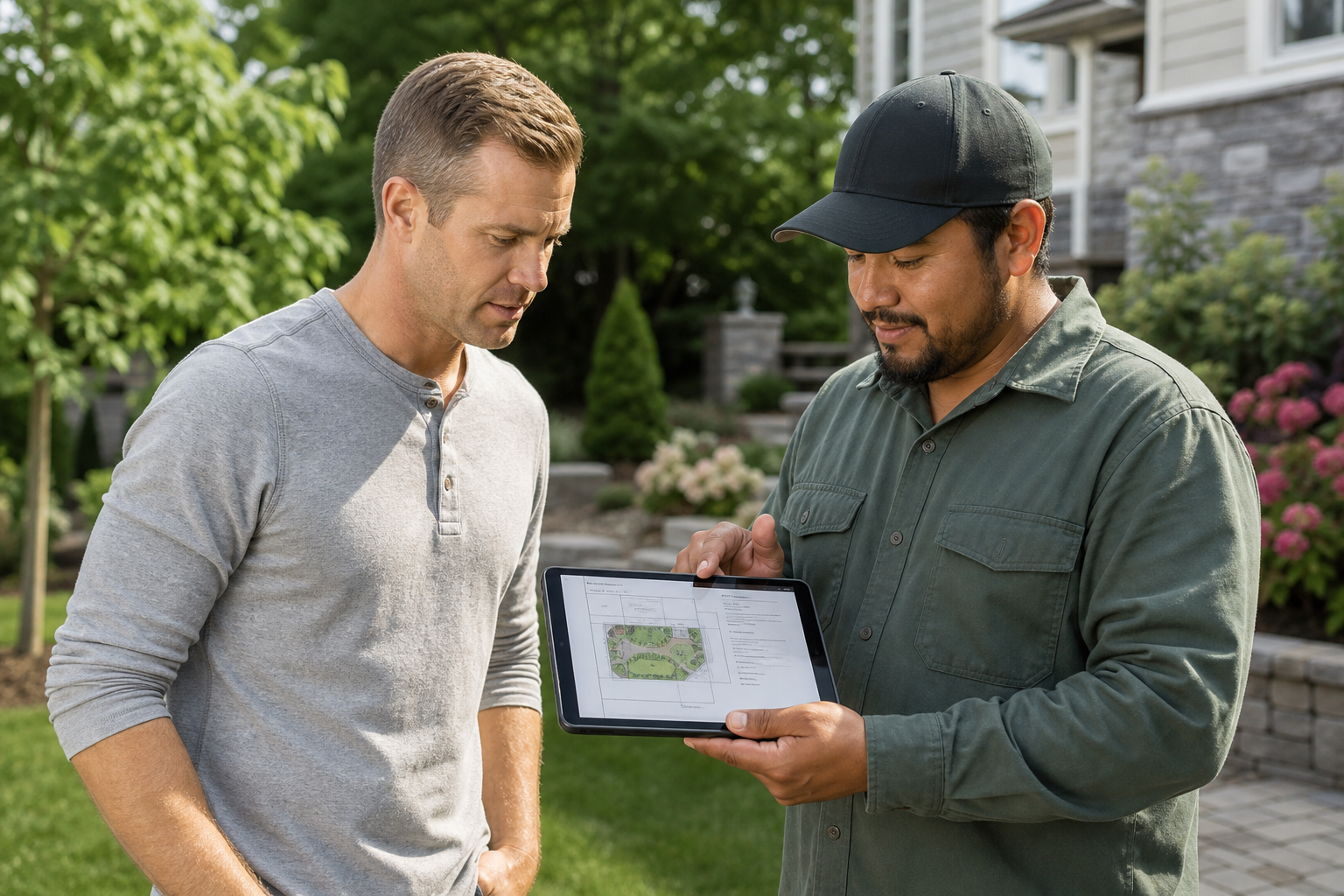
Reviewing a branded proposal on site is faster when landscape proposal software handles the formatting automatically.
What Is Landscape Proposal Software?
Landscape proposal software is a digital system that helps landscaping, lawn care, hardscaping, and related outdoor service companies build, send, and track client-facing estimates and proposals. In short, it replaces manual quoting with templates, automatic pricing, and electronic approvals. Most platforms also connect the proposal directly to scheduling, invoicing, and job costing, so there's no need to re-enter the same information three or four times.
For example, a company using True Pro can pull from a saved pricing catalog, add site photos captured through the CRM (customer relationship management) system, and generate a branded proposal complete with a digital signature field. Consequently, the gap between "we met the client" and "the job is on the schedule" shrinks from days to minutes.
Why Growing Landscaping Companies Need Better Proposal Tools
As a landscaping business grows past a handful of crews, manual quoting starts to break down. Estimators price the same job differently, proposals take days to go out, and paper quotes simply get lost between the truck and the office. In addition, prospective clients are comparing multiple contractors, and the first one to send a clear, professional proposal often wins the job regardless of price.
According to the U.S. Bureau of Labor Statistics, demand for grounds maintenance work is expected to keep growing over the next decade, which means more competition for the same pool of residential and commercial clients. Therefore, companies that respond fastest with the most professional proposal tend to capture a larger share of that growing market. Specialty work such as the services covered on True Pro's irrigation and lighting and hardscaping and masonry pages often involves more complex pricing, which makes a reliable proposal system even more valuable.
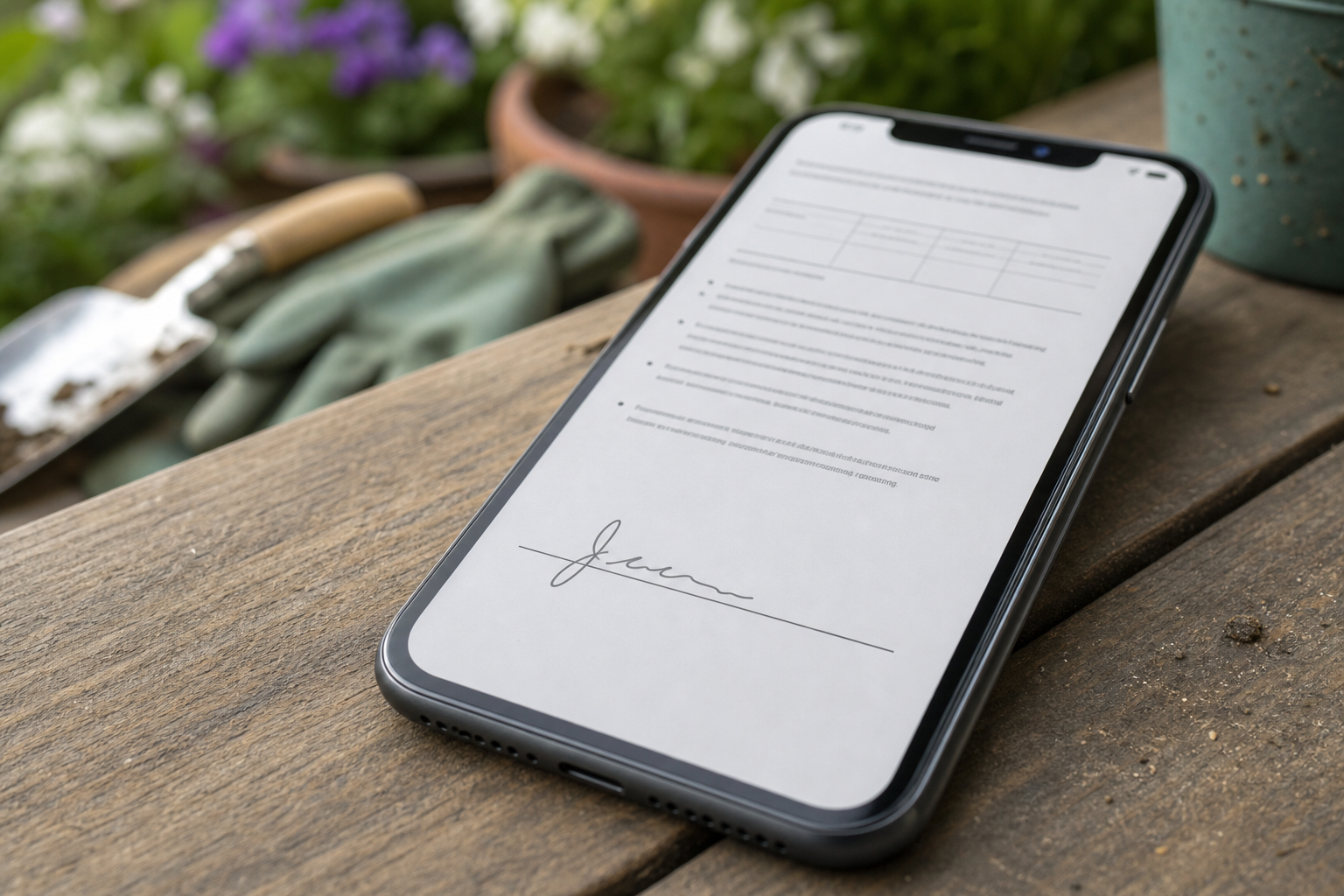
Digital signatures let clients approve a proposal without printing a single page.
Key Features to Look for in Landscape Estimating Software
Not every estimating tool is built the same way. Above all, landscaping companies should look for software that understands how outdoor service pricing actually works, rather than a generic form adapted from another trade.
- Reusable templates: Save pricing for common services like mowing packages, seasonal cleanups, or irrigation installs.
- Branded proposal formatting: Logos, colors, and layout that match the company's identity.
- Digital signatures: Built-in e-signature tools, such as True Pro Signature, so clients can approve work remotely.
- Job costing connection: Estimates that feed directly into real-time profit-and-loss tracking once the job is underway.
- Mobile access: The ability to build or adjust a proposal from a phone or tablet while still on site.
In particular, the connection between proposals and job costing matters more than it might seem at first. Once a proposal is signed, the budgeted labor and material costs should carry straight into a profitability report, so owners can see budget versus actual spend without manually rebuilding a spreadsheet.
How Landscape Proposal Software Works, Step by Step
While every platform looks slightly different, most landscape proposal software follows the same basic workflow from first contact to signed job. Here's how that process typically unfolds:
- Capture the lead and property details. Staff log the customer's contact information, property address, and site photos into the CRM so the estimator has full context before pricing anything.
- Build the estimate from a reusable template. The estimator selects a saved service template or catalog item so labor, materials, and markup calculate automatically instead of being typed in by hand.
- Send a branded proposal for review. The system generates a proposal with company branding, scope of work, and pricing, then delivers it to the client's email or phone within minutes.
- Collect a digital signature and convert to a job. Once the client signs electronically, the proposal converts directly into a scheduled job and invoice without any manual re-entry.
Consequently, what used to take a day or two of back-and-forth phone calls can now happen in a single site visit, which keeps momentum with the client while the job is still top of mind.
Landscape Proposal Software vs. Generic Field Service Tools
Generic field service software is built to serve many different trades at once, from plumbing to HVAC to cleaning. As a result, it often misses details that matter specifically to landscaping, such as recurring mowing routes, seasonal material pricing, or plant and hardscape material catalogs.
| Capability | Generic Field Service Tool | Landscape Proposal Software |
|---|---|---|
| Pricing templates | Built for general trades, needs heavy customization | Pre-built around landscaping services and materials |
| Route and crew scheduling | Often limited or add-on only | Built-in drag-and-drop dispatch and route optimization |
| Job costing | Basic or disconnected from estimates | Real-time budget vs. actual tied to the signed proposal |
True Pro was built differently from the start. Founder Brandon Conroy owned and operated landscape companies before building the platform, so True Pro follows how a landscape business actually makes money instead of bending a generic tool to fit. In contrast to tools adapted from other industries, every proposal, schedule, and invoice in True Pro is designed around landscaping workflows specifically.
Choosing the Right Proposal Software for Your Landscaping Business
Selecting proposal software should start with the company's biggest pain point today. For teams juggling multiple service lines, it helps to review how a platform handles specialty work, such as the modules shown on True Pro's irrigation and lighting page or its hardscaping and masonry page. Similarly, companies focused on building long-term client relationships should look closely at the CRM capabilities described on the CRM page, since lead and property history directly feed into accurate proposals.
For a broader look at how the full platform connects estimating, scheduling, invoicing, and reporting, the True Pro homepage and the main truepro.com site outline the complete workflow. The National Association of Landscape Professionals also offers general guidance on running an efficient landscaping business, which pairs well with software-driven process improvements. Ultimately, the right system is the one that matches how the company already prices and delivers work, rather than one that forces a new process onto the team.

Back-office staff rely on connected dashboards once a proposal turns into an active job.
Frequently Asked Questions About Landscape Proposal Software
What is landscape proposal software?
Landscape proposal software is a digital tool that helps landscaping companies build, send, and sign branded proposals and estimates for clients. It replaces paper quotes and generic templates with reusable, professional documents that connect directly to scheduling and invoicing.
How does landscape proposal software save time for landscaping companies?
It saves time by letting estimators reuse pricing templates instead of rebuilding quotes from scratch for every job. As a result, office staff spend less time on data entry and more time following up with leads.
Why do landscaping businesses switch from paper or generic templates to proposal software?
Most switch because paper quotes get lost, look unprofessional, and create pricing errors across crews. Proposal software standardizes pricing and branding, which reduces mistakes and helps close deals faster.
How much does landscape proposal software typically cost?
Pricing varies widely, from basic template tools under fifty dollars a month to full platforms that bundle CRM, scheduling, and invoicing for a per-user monthly fee. Most growing companies find the investment pays for itself through fewer missed jobs and faster payments.
How long does it take to create a branded proposal with software like True Pro?
With saved templates and pricing catalogs already loaded, most estimators can build and send a branded proposal in a few minutes rather than hours. This is especially true once service packages and material costs are set up in advance.
What's the difference between landscape proposal software and generic field service software?
Generic field service software is built to serve many trades at once, so it often misses landscaping-specific needs like recurring maintenance routes or plant and material catalogs. Landscape proposal software, in contrast, is designed around how landscaping companies actually estimate and schedule work.
Can landscape proposal software include digital signatures?
Yes, most modern landscape proposal software includes built-in digital signature tools so clients can approve a proposal from their phone or computer. True Pro, for example, uses True Pro Signature to capture approvals and automatically move the job into scheduling.
Does landscape proposal software integrate with accounting tools like QuickBooks?
Many platforms, including True Pro, integrate directly with QuickBooks so signed proposals flow into invoicing and the general ledger without manual re-entry. This keeps financial records accurate and saves bookkeeping time.
What features should landscaping companies look for in estimating and proposal software?
Look for reusable estimate templates, branded proposal formatting, digital signatures, and a direct connection to scheduling and job costing. Above all, the software should fit how landscaping work is actually priced and delivered.
What common mistakes do landscaping companies make with proposals before using software?
Common mistakes include inconsistent pricing between estimators, slow turnaround times, and proposals that look unprofessional compared to competitors. These issues often cost companies jobs even when their actual work quality is excellent.
Is landscape proposal software useful for small landscaping companies, or only large ones?
It is useful at almost any size, since even small crews benefit from faster, more consistent proposals. In fact, smaller companies often see the biggest relative time savings because they have fewer office staff to handle manual quoting.
How does landscape proposal software help win more jobs?
Faster, more professional proposals help companies respond to leads before competitors do, which directly improves close rates. Consistent branding and clear pricing also build trust with prospective clients during the decision stage.
Can proposal software handle specialty work like irrigation, lighting, or hardscaping?
Yes, platforms built specifically for landscaping, such as True Pro, support specialty templates for irrigation and lighting, hardscaping and masonry, and other service lines. This allows one system to handle diverse crews instead of forcing every job into a generic template.
Final Thoughts
In the end, landscape proposal software is less about replacing paperwork and more about removing friction between winning a lead and starting a job. Specifically, when estimating, scheduling, invoicing, and job costing all connect through one system, companies spend less time chasing information and more time delivering work. Whether a team is handling routine mowing, irrigation and lighting installs, or hardscaping and masonry projects, choosing proposal software built around how landscaping businesses actually operate makes that connection possible. For companies ready to see how an end-to-end platform like True Pro fits their workflow, reviewing the full feature set is a reasonable next step before switching systems.