
Crew dispatch software for landscaping is the tool growing companies use to schedule jobs, route crews, and manage daily field work from one screen, instead of juggling paper routes, group texts, and spreadsheets. As crew counts grow, so does the chaos of manual scheduling. Consequently, more landscaping, lawn care, and hardscaping companies are switching to dedicated dispatch platforms to keep routes tight and crews on time.
Direct answer: Crew dispatch software for landscaping schedules jobs, builds optimized routes, and sends real-time work orders to field crews through a mobile app, replacing manual routing with GPS-enabled tracking and instant updates.
What Is Crew Dispatch Software for Landscaping?
Crew dispatch software for landscaping is a system that assigns field jobs to crews, builds daily or weekly routes, and tracks progress until each job is marked complete. Rather than relying on a whiteboard or a shared spreadsheet, a dispatcher can drag and drop jobs onto a crew's calendar, see where every truck is on a live map, and push changes straight to a worker's phone.
For example, when a crew finishes a mow early, the dispatcher can immediately slot in the next recurring job without a phone call. Similarly, if a truck breaks down, remaining stops can be reassigned in minutes instead of hours. In short, this software turns routing from a guessing game into a repeatable, trackable process.

A dispatcher plans daily routes using crew dispatch software for landscaping before crews head into the field.
Why Growing Landscaping Companies Need Better Crew Scheduling
As a company adds crews, manual scheduling breaks down fast. A dispatcher juggling ten routes on paper can usually manage; however, that same process at thirty or forty routes becomes unmanageable and error-prone. Jobs get double-booked, drive time balloons, and crews waste mornings waiting for instructions.
Furthermore, the landscaping industry itself keeps growing, which increases pressure on scheduling systems. According to the U.S. Bureau of Labor Statistics, landscaping services employ well over a million workers nationwide, and demand for outdoor property maintenance continues to climb in most regions. As a result, companies that still rely on sticky notes and group texts fall behind competitors running on real scheduling systems.
In addition, better crew scheduling software directly affects revenue. When routes are tight and crews stay busy, a company can serve more properties with the same headcount. Consequently, dispatch efficiency becomes a profit lever, not just a convenience.
Key Features of Landscape Routing and Dispatch Tools
Not every scheduling app qualifies as true dispatch software. Specifically, landscape routing and dispatch tools should include the following core capabilities:
- Drag-and-drop scheduling for quick route building and same-day changes.
- GPS-enabled maps showing live crew and vehicle locations.
- Recurring job support for weekly mowing, maintenance, or inspection routes.
- A mobile field app for work tickets, checklists, and photos.
- Job costing links so routes connect to real profitability, not just a calendar.
Without these pieces, a tool may schedule appointments, but it will not truly dispatch a landscaping crew in a way that saves drive time or captures accurate field data.
How to Dispatch Landscaping Crews More Efficiently
Switching to software does not automatically fix routing. Therefore, most companies get the best results by following a clear process. The steps below outline how dispatch software fits into a repeatable routing workflow.
- Audit current routes and job list. Review each day's scheduled jobs, crew locations, and travel distances before building new routes, so you can spot overlap and wasted drive time.
- Group jobs by zone and crew skill. Cluster properties by geographic area and match each route to a crew with the right equipment and certifications for that type of work.
- Build routes with GPS-enabled dispatch software. Use drag-and-drop scheduling and route optimization tools to sequence stops, minimize backtracking, and send finished routes directly to crew phones.
- Monitor live progress and adjust on the fly. Track crew GPS locations and job status throughout the day, and reroute instantly when a job runs long or a crew calls out sick.
- Review completed routes and profitability. Compare actual time and costs against the budgeted estimate for each job to refine future routing decisions and crew assignments.
This process relies on the same logic used in the classic vehicle routing problem studied in operations research, grouping stops and minimizing travel distance. Dispatch software simply automates that math for landscape crews.
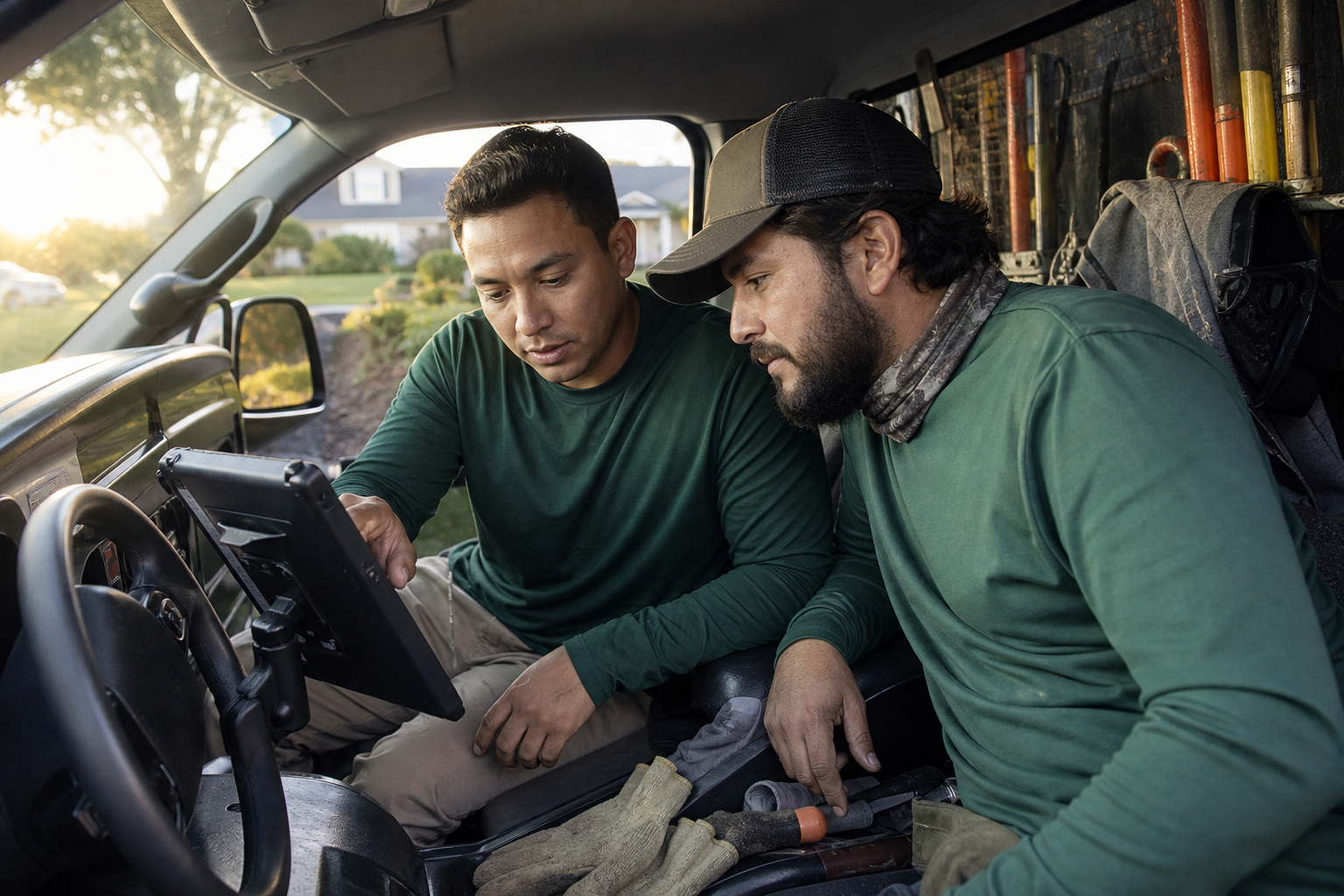
Field crews receive dispatched work orders directly on a mobile device instead of a paper route sheet.
Crew Dispatch Software vs. Manual Scheduling
Many companies still route crews with a whiteboard, a printed map, and a group chat. This approach can work for a handful of crews; however, it quickly becomes a liability once a company scales past that point. The table below compares the two approaches side by side.
| Factor | Manual Scheduling | Dispatch Software |
|---|---|---|
| Route visibility | Static, updated by phone or radio | Live GPS map updated in real time |
| Same-day changes | Slow, requires calls and texts | Instant drag-and-drop reassignment |
| Data for job costing | Manual entry, often delayed | Captured automatically from field app |
Choosing Lawn Care and Landscaping Dispatch Software for Your Team
When comparing options, it helps to look beyond the sales demo. For instance, ask whether the platform was actually built for landscaping workflows or adapted from a generic field service tool. Because landscaping jobs involve recurring routes, seasonal surges, and crew-based work rather than single technician visits, generic tools often miss the mark.
Moreover, check how dispatch connects to the rest of the business. A platform that links scheduling to invoicing, job costing, and QuickBooks saves a separate step later. Resources like the True Pro landscaping software overview and guides such as which landscaping software is easiest for field crews to use can help narrow the comparison before committing to a demo.
How True Pro Supports Crew Dispatch for Landscaping Teams
True Pro was built by a landscape contractor, Brandon Conroy, who ran landscape companies before building the platform. As a result, its crew dispatch tools follow how landscaping jobs actually move, from lead to estimate to scheduled work to invoice.
Specifically, True Pro offers drag-and-drop crew dispatch with recurring work support, route optimization, and GPS-enabled maps so dispatchers can see every crew at once. Its field operations mobile app gives crews work tickets, checklists, photos, and time tracking, so office staff do not have to chase down paperwork. In addition, dispatch data feeds directly into job costing reports, so managers can see real-time profit and loss by job instead of waiting until month-end.
For teams exploring a full operating system rather than a single scheduling app, the True Pro landscaping platform page and the article on what the best software for a growing landscaping company looks like offer a closer look at how dispatch fits into the bigger picture. Related reading on the best mobile app for field operations also covers how crews use dispatched routes on the ground.
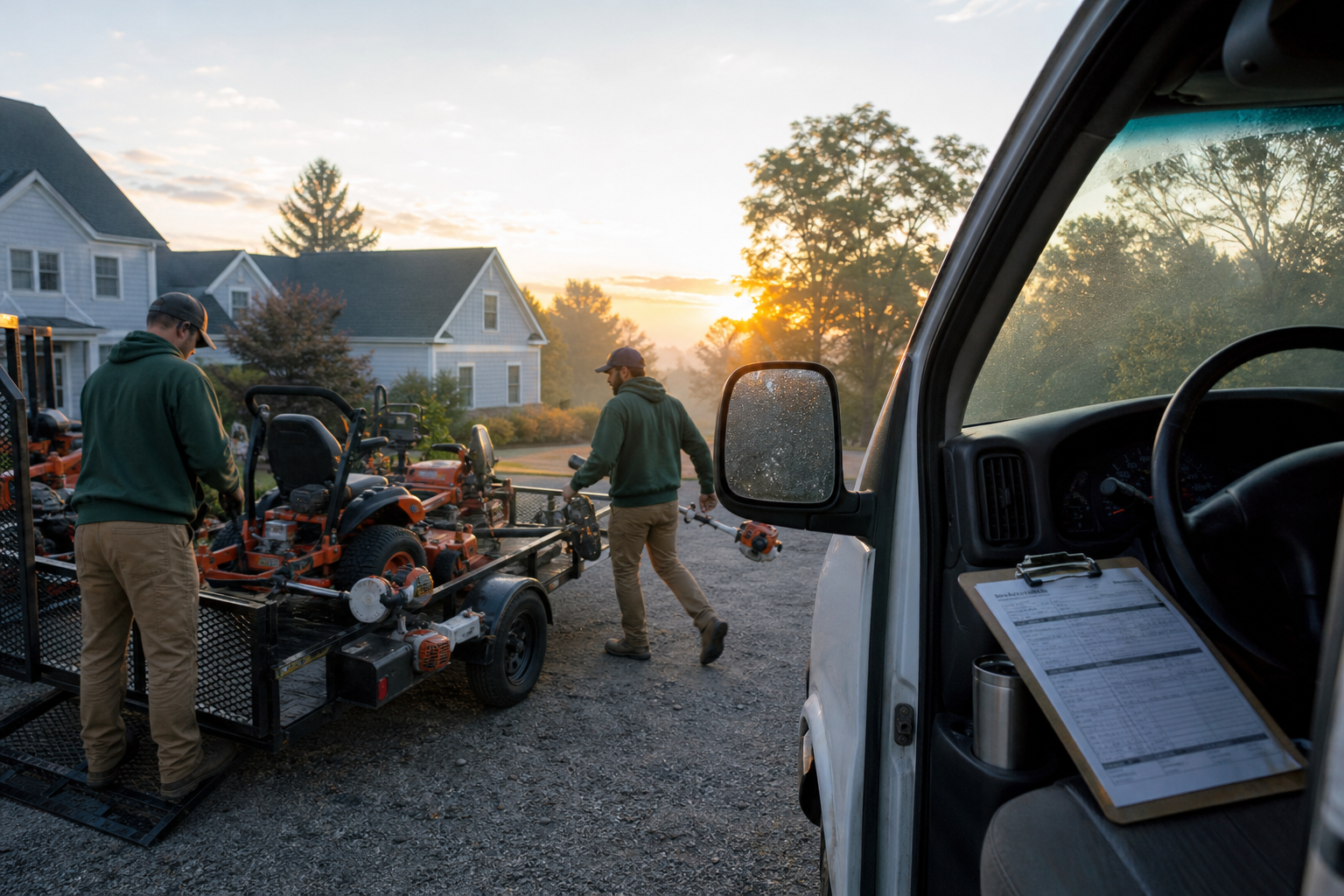
Efficient routing from crew dispatch software for landscaping gets crews moving faster at the start of the day.
Frequently Asked Questions About Crew Dispatch Software for Landscaping
What is crew dispatch software for landscaping?
Crew dispatch software for landscaping is a digital tool that schedules jobs, routes crews, and tracks field work from a single dashboard. It replaces paper routes, group texts, and spreadsheets with live scheduling and GPS-enabled tracking.
How does dispatch software differ from a scheduling app?
A basic scheduling app mainly manages calendar slots, while dispatch software also routes crews, assigns jobs by location and skill, and syncs with field crew mobile apps. Landscaping dispatch tools typically include GPS maps and real-time status updates that a plain calendar lacks.
How much does landscaping dispatch software cost?
Pricing varies widely based on crew count, features, and whether billing or job costing is included, with many platforms charging per user or per month. Smaller crews often pay less for core scheduling, while larger companies pay more for routing, invoicing, and reporting bundled together.
Can crew dispatch software reduce drive time between jobs?
Yes, route optimization features in dispatch software group nearby jobs and sequence stops to cut unnecessary driving. This helps crews finish more properties per day without adding staff or vehicles.
What features matter most in landscape crew scheduling software?
Drag-and-drop scheduling, GPS-enabled routing, recurring job support, and a mobile app for crews matter most. Job costing and invoicing integration also matter because they connect the schedule to real profitability.
How long does it take to set up dispatch software for a landscaping company?
Basic setup can take a few days for a small crew, while full data migration and training for larger teams may take several weeks. Guided onboarding from the software provider usually shortens this timeline.
What is the biggest mistake companies make when adopting dispatch software?
The most common mistake is skipping proper training and data cleanup before go-live, which leads to messy schedules and crew frustration. Companies that migrate clean customer and job data and train dispatchers first see faster adoption.
Does crew dispatch software work for multiple service types, like lawn care and hardscaping?
Yes, most modern dispatch platforms support multiple service lines by letting you tag jobs, crews, and equipment by type of work. This lets one system handle mowing routes, hardscape installs, and irrigation service calls together.
How does GPS tracking improve crew dispatch for landscaping teams?
GPS tracking shows dispatchers exactly where each crew and vehicle is in real time, so they can reroute quickly when a job runs long or a truck breaks down. It also provides accurate arrival and departure data for billing and payroll.
Is crew dispatch software only useful for large landscaping companies?
No, growing companies with even a handful of crews benefit from dispatch software because manual routing becomes error-prone quickly. Smaller teams often see the fastest return since even small drive-time savings matter to a tight crew schedule.
What is the best way to compare landscaping dispatch software options?
Compare platforms based on routing capability, mobile app usability for crews, integration with accounting tools, and whether the software was built specifically for landscaping workflows. Requesting a live demo with your own job data gives the clearest comparison, and organizations like the National Association of Landscape Professionals can be a useful resource when researching industry standards.
Final Takeaways
Crew dispatch software for landscaping turns scattered routing decisions into a repeatable, trackable process that saves drive time and captures better field data. As companies add crews, the gap between manual scheduling and dedicated dispatch tools only widens, making the switch increasingly worthwhile. Ultimately, the right platform should route crews efficiently, feed accurate data into job costing, and fit how a landscape business actually operates day to day. Teams ready to compare options can explore True Pro to see how dispatch, field operations, and profitability reporting work together in one system built specifically for landscaping companies.